

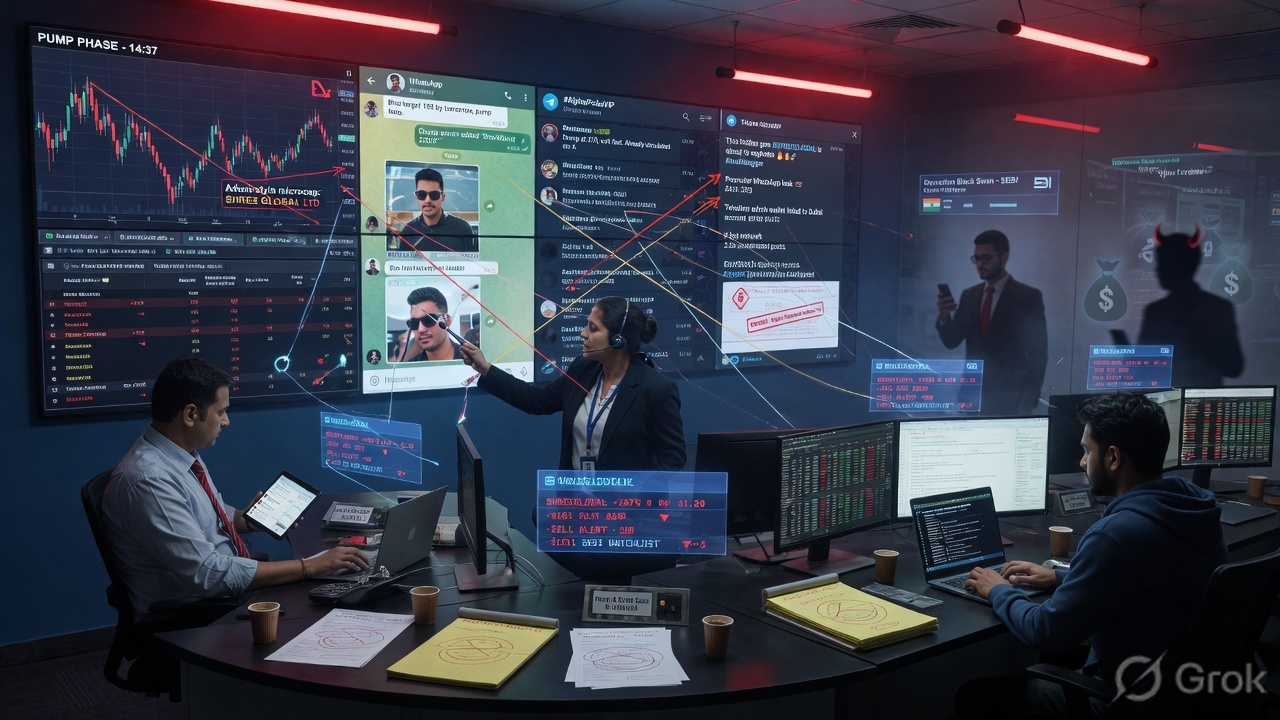
SEBI Whole Time Member (WTM) Kamlesh Varshney has once again demonstrated how technology-driven investigation can expose sophisticated market manipulation schemes operating in the digital age. Through extensive digital forensics and data analysis, SEBI has unearthed yet another alleged pump-and-dump operation thriving in the shadows of social media platforms. In its recent interim order dated 22nd May 2026, WTM Varshney and his team have shown how modern market manipulation leaves behind digital footprints that are often impossible to erase. From trading records and social media activity to WhatsApp chats and Telegram communications, the investigation pieces together a trail of evidence that the alleged perpetrators could scarcely deny.
SEBI’s recent interim order in the matter relating to stock recommendations disseminated through social media platforms offers an important glimpse into this evolving challenge. The order concerns an alleged scheme involving coordinated trading activity combined with aggressive promotion of select stocks through X (formerly Twitter), Telegram and WhatsApp channels. While the investigation is still ongoing, the findings recorded in the interim order underscore a larger concern for regulators and investors alike — the growing misuse of social media influence to manipulate market behavior.
The Alleged Scheme
According to SEBI, the noticees allegedly engaged in a structured strategy wherein positions were first accumulated in selected stocks — predominantly SME-listed companies — before those stocks were promoted extensively across social media platforms.
Once public interest and trading activity increased, the entities allegedly liquidated their holdings at elevated prices, thereby earning significant profits. SEBI observed prima facie evidence of this pattern across 82 scrips during the examination period and estimated wrongful gains of approximately ₹20.25 crore.
The order further notes alleged violations of provisions under the SEBI Act, the PFUTP Regulations and, in certain cases, the Research Analyst Regulations.
At its core, the matter reflects a contemporary adaptation of the classic “pump and dump” model — executed not through cold calls or newsletters, but through digital communities built on social media engagement and perceived investing expertise.
How the Activity Came Under Regulatory Scrutiny
One of the notable aspects of the order is the manner in which the investigation evolved.
SEBI states that the matter originated from its internal surveillance of social media activity, where certain accounts were observed posting repeated recommendations relating to SME stocks.
The regulator thereafter examined whether these online recommendations were connected with corresponding trading activity.
The investigation reportedly involved:
- trading analysis,
- social media posts,
- call data records,
- KYC documentation,
- WhatsApp and Telegram communications,
- electronic evidence seized during search operations,
- and statements recorded under oath.
Search and seizure operations were also conducted in January 2026.
What makes the order particularly significant is the extent to which digital communication allegedly revealed intent and coordination.
In one instance cited by SEBI, a conversation allegedly suggested that promotional posts should be released immediately after acquiring positions so that the stock could potentially hit consecutive upper circuits.
In another, discussions reportedly revolved around how messaging on WhatsApp and Telegram should emphasize target prices and highlight selective financial metrics in order to attract investor attention.
Perhaps most revealing were communications indicating awareness of regulatory scrutiny. Certain chats referenced the need to avoid explicit “buy” or “sell” recommendations, aggressive claims and terms such as “multibagger” or “sure shot” in public posts to reduce the risk of attracting SEBI’s attention.
From a regulatory standpoint, such evidence becomes particularly relevant because it potentially indicates not merely enthusiasm toward specific stocks, but conscious efforts to structure communication in a manner designed to avoid detection.
Why SME Stocks Are Especially Vulnerable
A substantial portion of the stocks discussed in the order belonged to the SME segment.
This is not incidental.
SME-listed stocks often have relatively lower liquidity, smaller public float and limited institutional participation. In such an environment, even modest buying pressure generated through coordinated social media promotion can lead to sharp price movements.
The lower the liquidity, the easier it becomes for sentiment-driven trading to disproportionately influence prices.
Retail investors often interpret rapid price appreciation as confirmation of strong fundamentals or informed buying activity. In reality, price momentum in such cases may simply reflect temporary demand created by promotional campaigns rather than sustainable business value.
This creates fertile ground for speculative excess.
The Impact on Retail Investors
The broader concern arising from such alleged activities is not merely market manipulation in a technical sense, but the erosion of investor trust.
Retail participation in Indian equities has grown significantly over the past few years, with many first-time investors relying heavily on digital platforms for investment ideas. Social media accounts with large followings often cultivate credibility through:
- selective showcasing of successful recommendations,
- visually sophisticated content,
- simplified narratives,
- and repeated claims of identifying “hidden opportunities”.
For inexperienced investors, this can create an illusion of expertise and reliability.
However, social influence is not a substitute for fiduciary responsibility, regulatory registration or rigorous research standards.
When investors enter such trades after prices have already appreciated materially, they risk becoming the final participants in a momentum cycle that may already be nearing exhaustion. Losses incurred in such episodes can be severe, particularly in illiquid SME counters where exits become difficult once sentiment reverses.
The issue also has systemic implications. Persistent manipulation through social media weakens confidence in price discovery mechanisms and risks transforming investing into a speculative popularity contest rather than a process driven by underlying business fundamentals.
Key Lessons for Investors
The order offers several practical lessons for market participants.
- Treat social media recommendations with caution
Any investment idea circulated aggressively across multiple channels warrants careful scrutiny, particularly when accompanied by exaggerated certainty or unrealistic projections.
- Independent analysis remains essential
No investor should rely exclusively on Telegram groups, WhatsApp forwards or influencer commentary while making investment decisions. Financial statements, valuations, business quality and governance standards must remain central to the investment process.
- Be wary of narrative-driven investing
Terms such as “next multibagger”, “hidden gem” or “once-in-a-lifetime opportunity” are often designed to trigger emotional decision-making rather than rational analysis.
- Understand potential conflicts of interest
One of the most important questions investors should ask is whether the individual promoting a stock already holds a position in it and whether such interest has been transparently disclosed.
- Popularity does not equal credibility
A large follower base may indicate reach, but it does not establish regulatory compliance, ethical conduct or investing competence.
A Larger Regulatory Message
SEBI’s interim order reflects the regulator’s increasing focus on digital-era market misconduct. The case demonstrates how market surveillance is evolving beyond traditional trading analysis into the examination of online behaviour, communication trails and social media influence networks.
For investors, the message is equally important.
The democratization of financial information is a positive development. However, democratization without discernment creates vulnerability.
In modern markets, misinformation can travel faster than research, and influence can sometimes move prices faster than fundamentals.
That is precisely why skepticism remains one of the most valuable risk-management tools available to investors today.